
Imagine this: your XCMG wheel loader is on a busy construction site, moving material against a tight deadline. The operator pulls the joystick to lift the bucket — but the boom crawls upward, sluggish and weak. The machine that once powered through heavy loads now struggles to perform basic functions. The diagnosis? A failing hydraulic working pump.
This is a scenario that plays out across mines, quarries, and construction sites worldwide. The hydraulic working pump is the heart of your loader’s lifting and tilting system, and when it begins to fail, the entire machine’s productivity collapses with it. For fleets running the XCMG LW500K and ZL50G 5-ton wheel loaders — machines prized for their strong breakout force of 17 tons and traction of 16.5 tons — the Double Working Hydraulic Pump 803013093 is the component that keeps these workhorses earning their keep.
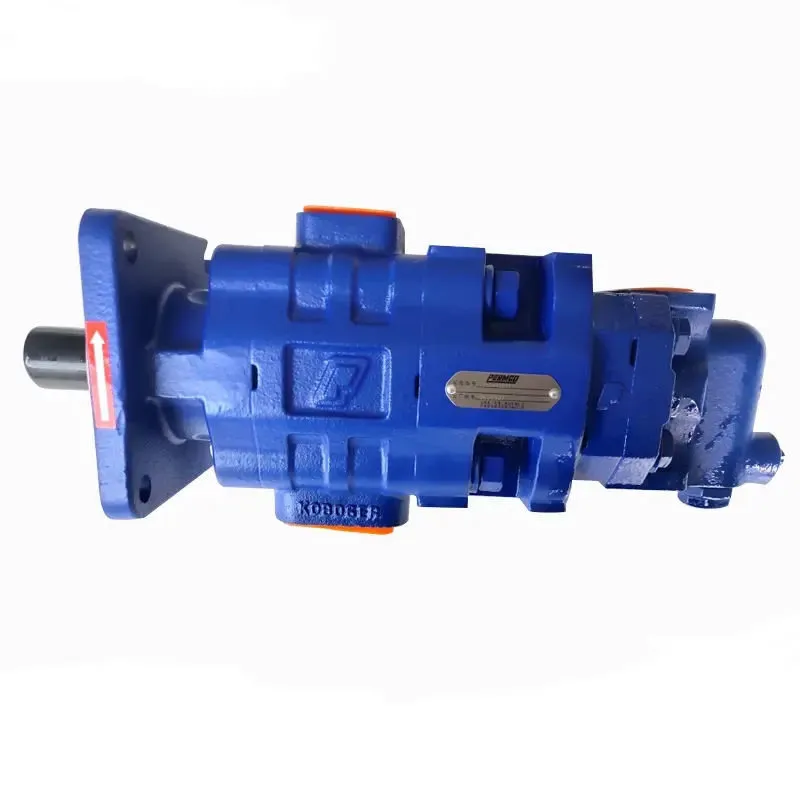
The Heartbeat of Your XCMG Loader: What the 803013093 Does
The hydraulic working pump is the core power source of the loader’s implement system, responsible for delivering pressurized hydraulic fluid to the lift cylinders and tilt cylinder. In the LW500K and ZL50G, this pump employs a double-pump confluence hydraulic system — a design that merges flow from two pump sections to maximize both speed and force simultaneously.
Key specifications of the 803013093 pump:
| Parameter | Detail |
|---|---|
| Part Numbers | 803013093 / 1155442011 / P7260-100/10 / 1151412009 |
| Pump Type | Double Gear Pump (CBGj2/1 series) |
| Housing Material | High-strength cast iron |
| Max. Continuous Pressure | 28 MPa |
| Displacement Range (series) | 8–200 mL/rev |
| Compatible Models | XCMG LW500K, ZL50G, LW500KL, ZL50GN, LW300, LW500 |
| OE Manufacturer | Parker Hannifin (泊姆克) |
This pump works in concert with the loader’s priority flow control valve system. Hydraulic fluid is drawn from the reservoir through the suction line, pressurized by the dual gear pump sections, and then directed to the working implements through high-pressure lines. The dual-pump confluence design allows the loader to combine lifting force with tilting speed — essential when loading trucks or stockpiling material in rapid cycles.
Without a properly functioning working pump, the loader simply cannot perform:
- Slow or weak boom lifting — the pump cannot generate sufficient flow or pressure
- Delayed bucket tilting — the tilt circuit starves for hydraulic power
- Overheating hydraulic oil — internal pump leakage generates excess heat
- Complete loss of implement function — a catastrophic pump failure leaves the bucket dead in the air
Recognizing the Warning Signs: When Your 803013093 Is Failing
Hydraulic pump failures rarely happen without warning. Experienced fleet managers and operators can spot the symptoms early and schedule proactive replacement — avoiding the far higher cost of emergency downtime on an active job site.
Here are the most common symptoms indicating the 803013093 working pump needs attention:
- Increased hydraulic noise — a rattling or whining sound from the pump area often signals cavitation, air ingress, or internal component wear
- Slow cycle times — the boom lifts noticeably slower, and bucket dump/tilt functions become sluggish
- Pressure loss and weak breakout force — the machine struggles to penetrate piles that it previously handled with ease
- Overheating hydraulic system — internal leakage in the pump generates excessive heat that can degrade seals and the hydraulic oil throughout the entire system
- Jerky or inconsistent implement movement — the boom or bucket hesitates or moves in erratic bursts, indicating flow instability
- External oil leaks — visible hydraulic oil around the pump mounting flange or shaft seal
- System unable to reach relief pressure — the pump cannot build sufficient pressure to trigger the main relief valve
If any combination of these symptoms is present, the working pump should be inspected immediately. Continuing to operate with a failing pump risks contaminating the entire hydraulic system with metal particles — transforming a pump replacement into a far more expensive system-wide cleanup and component rebuild.
One Pump, Multiple Models: Extended Compatibility That Simplifies Inventory
One of the most practical advantages of the 803013093 Double Working Pump is its broad cross-model compatibility across the XCMG wheel loader family. This pump was engineered as a standard working implement pump for multiple 5-ton class machines, making it a versatile inventory item for fleet managers who operate mixed-model equipment.
Directly fits these XCMG wheel loader models:
| Model | Rated Load | Bucket Capacity | Operating Weight |
|---|---|---|---|
| LW500K | 5,000 kg | 3.0 m³ | 17,200 kg |
| ZL50G | 5,000 kg | 3.0 m³ | ~17,000 kg |
| LW500KL | 5,000 kg | 3.0 m³ | ~17,200 kg |
| ZL50GN | 5,000 kg | 3.0 m³ | ~17,500 kg |
Additionally, the gear pump series used in the 803013093 is widely deployed across XCMG’s LW300, LW500, and related variants. For rental fleets, mine maintenance departments, or independent workshops servicing multiple XCMG machines, stocking one pump part number that covers four or more loader models represents a significant inventory simplification.
Genuine Aftermarket vs. OEM: A Smarter Approach to Parts Procurement
When a critical hydraulic component fails, fleet managers face a familiar decision: purchase from the OEM dealer network or source a quality aftermarket alternative. Both paths have merit, and the right choice often depends on the machine’s age, warranty status, and the operator’s budget.
OEM advantages:
- Guaranteed fit and performance to factory specifications
- Full manufacturer warranty support
- Traceable quality control documentation
OEM disadvantages:
- Significantly higher pricing (aftermarket parts can be 20–50% less expensive than OEM equivalents)
- Longer lead times, particularly for machines outside the current production range
- Dealer markup on already premium-priced components
Aftermarket advantages:
- Substantial cost savings — often 25% to 60% lower than OEM pricing
- Faster availability, especially critical for older or discontinued equipment models
- Flexible procurement with multiple supplier options
Aftermarket disadvantages:
- Quality varies significantly between suppliers
- Some low-cost alternatives use inferior materials or looser tolerances
- Warranty terms may be shorter than OEM coverage
The key distinction is between “generic aftermarket” and “engineered aftermarket.” The XCMG LW500K/ZL50G Double Working Hydraulic Pump 803013093 available from Partsbyu falls into the engineered category. Each pump is manufactured to 1:1 OE specifications, matching the original Parker Hannifin design — including the cast iron housing for structural integrity, the precision-machined gear profiles for efficient fluid transfer, and the high-quality bearing and seal elements that enable continuous operation at pressures up to 28 MPa.
Best practice for fleet procurement: Maintain OEM parts for machines still under factory warranty, and build a trusted aftermarket supplier relationship for older units, routine maintenance, and emergency replacements where speed matters more than brand label.
The Partsbyu Advantage: What Makes This Offer Unique
Manufactured to Original Specifications:
The 803013093 working pump is produced to the same design and material specifications as the original Parker Hannifin unit fitted to XCMG loaders. The cast iron housing provides the structural strength necessary for continuous high-pressure operation, while the precision-machined gear set ensures efficient flow delivery with minimal internal leakage.
Rigorous Quality Control:
Every pump undergoes factory testing before shipment. The CBGj2/1 series gear pump design is known for high efficiency, strong impact resistance, low noise, and excellent contamination tolerance — characteristics essential for the dusty, high-vibration environments where wheel loaders operate.
Warranty and After-Sales Support:
The 803013093 working pump is backed by a 1-year warranty, and the Partsbyu support team is available to handle technical inquiries regarding compatibility, installation, and troubleshooting.
Global Availability and Fast Dispatch:
Partsbyu ships worldwide with efficient logistics coordination. Orders are processed promptly to minimize equipment downtime. For urgent requirements, expedited shipping options can be arranged.
Flexible Order Quantities:
Whether you need a single replacement unit for immediate repair or bulk quantities for fleet maintenance programs, Partsbyu accommodates both small and volume orders.
Installation Best Practices: Maximizing Pump Service Life
Replacing a hydraulic working pump is a straightforward procedure for competent technicians, but attention to detail during installation significantly impacts the pump’s service life.
1. Cleanliness is critical. Before removing the old pump, thoroughly clean the surrounding area to prevent dirt and debris from entering the hydraulic system. Even small particles can damage precision clearances inside the new pump.
2. Inspect the suction line. A restricted or leaking suction line is a common cause of premature pump failure. Check the suction hose for internal delamination that can restrict flow, and verify that all connections are airtight. Air leaks on the suction side cause cavitation — one of the fastest ways to destroy a new gear pump.
3. Check the hydraulic oil condition. If the failed pump released metal particles into the system, the oil must be drained and replaced. Install a new return filter and consider flushing the system before installing the new pump.
4. Prime the pump before startup. After installation, fill the pump housing with clean hydraulic oil through the outlet port. A dry start — even for a few seconds — can score the internal gear surfaces.
5. Verify rotation direction. Confirm that the pump’s rotation direction matches the engine’s drive coupling before finalizing installation.
6. Bleed air from the system. After startup, cycle the boom and bucket through their full range of motion several times to purge trapped air. Monitor the hydraulic oil level and top up as needed after air purging is complete.
7. Break-in monitoring. During the first hours of operation, periodically check the pump’s external temperature, listen for any abnormal noise, and inspect for leaks at the mounting flange and port connections.
Total Cost of Ownership: Why a Quality Pump Pays for Itself
Consider a typical scenario: a mid-sized fleet operates five XCMG LW500K loaders across quarry and construction applications, averaging 2,000 operating hours per machine annually. Industry experience indicates that hydraulic working pumps in these conditions typically require replacement approximately every 4,000 to 6,000 operating hours, depending on maintenance practices and operating conditions.
For a fleet of five machines, this translates to approximately two working pump replacements per year across the fleet.
The cost of downtime is the hidden factor. A 5-ton wheel loader idled on a quarry face or construction site while waiting for a replacement pump costs far more than the pump itself — in lost production, in idled trucks waiting for loads, in penalty clauses for project delays. Partsbyu’s commitment to fast dispatch and global shipping means that your loader spends less time waiting for parts and more time moving material.
Common Questions from Fleet Managers
Q: Is this pump truly a direct replacement for the original?
A: Yes. The 803013093 working pump is manufactured to 1:1 OE specifications for the XCMG LW500K and ZL50G. It is a direct bolt-on replacement — no modifications to mounting brackets, hoses, or drive couplings are required.
Q: How do I confirm this pump fits my specific loader?
A: Cross-reference the part numbers stamped on your existing pump: 803013093, 1155442011, P7260-100/10, or 1151412009. These numbers all refer to the same working pump assembly. Additionally, confirm your loader model (LW500K, ZL50G, or compatible variant).
Q: What material is the pump housing?
A: The housing is high-strength cast iron, matching the original Parker Hannifin specification. Cast iron provides the structural rigidity needed for continuous operation at system pressures up to 28 MPa.
Q: What’s the difference between the 803013093 and other XCMG pump part numbers?
A: XCMG uses multiple part numbers for the same basic pump assembly due to supplier transitions and model-year updates. The 803013093 is the primary working pump part number; 1155442011 and P7260-100/10 are interchangeable designations used in different production periods. All refer to the same double gear pump configuration.
Q: How quickly can I receive my order?
A: Orders are processed promptly after payment confirmation. Standard shipping times depend on your location. For urgent requirements, contact the Partsbyu sales team to discuss expedited shipping options.
Q: Do you offer sample orders for evaluation?
A: Yes, single-unit evaluation orders are welcome. Many fleet managers start with one pump to verify fit and performance before placing volume orders for their fleet maintenance programs.
About Partsbyu
Partsbyu specializes in supplying high-quality spare parts for construction machinery, with a particular focus on XCMG wheel loaders, excavators, and related heavy equipment. Our mission is simple: provide engineered aftermarket parts that match OEM performance at a significantly lower cost, backed by responsive customer support and reliable global logistics.
Every part we supply is manufactured to rigorous specifications and undergoes strict quality inspection. We understand that construction machinery operates in punishing environments — our parts are built to perform reliably under those conditions.
Contact Partsbyu today to discuss your fleet’s parts requirements:
🌐 Website: www.partsbyu.com